
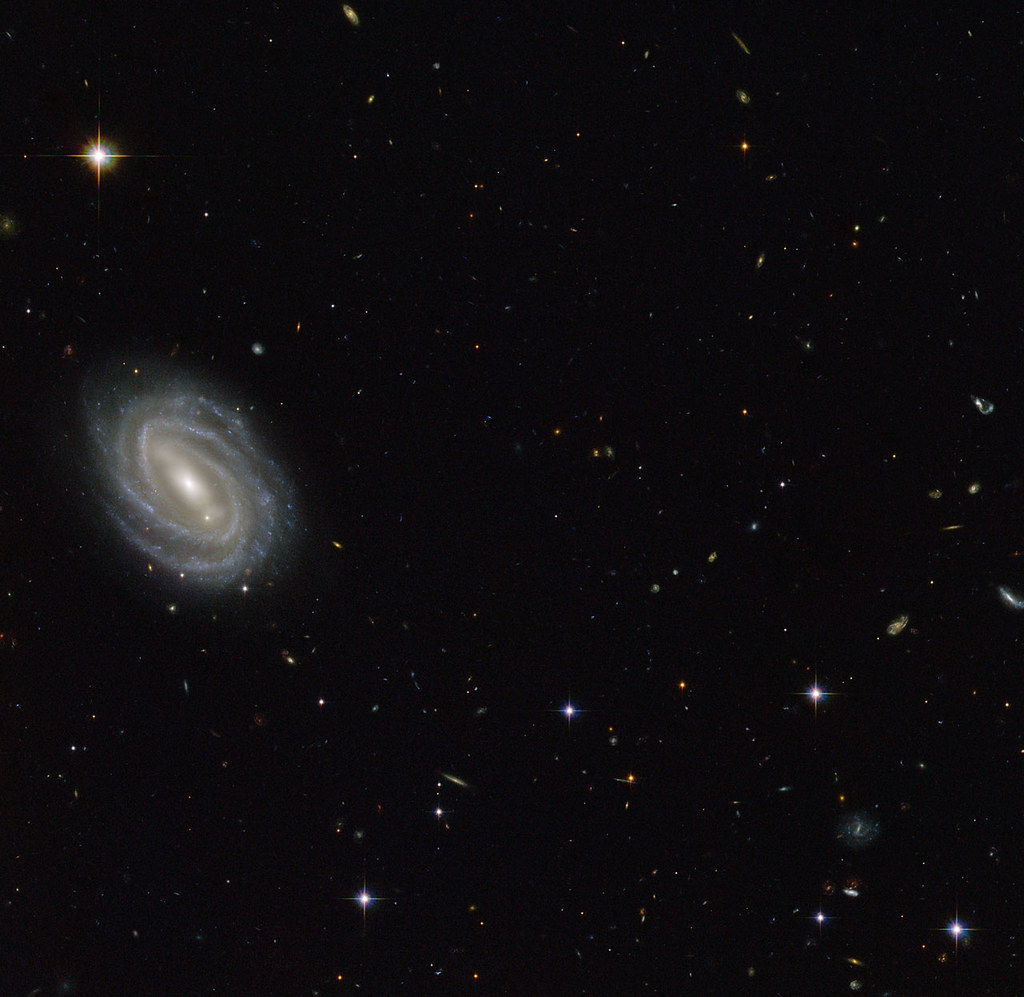
The tiny stellar system may be a ‘satellite of a satellite,’ shedding light on complex cosmic relationships. This discovery opens new avenues for understanding stellar formations.
What is a Tiny Stellar System?
A tiny stellar system is a compact grouping of celestial bodies that orbit around a central star or stellar object, often showcasing unique characteristics and relationships. These systems can consist of various types of objects, including planets, moons, asteroids, and comets, all bound by gravitational forces. The term “tiny” typically refers to the size and scale of the system compared to larger star systems, which might host more massive planets or multiple stars.
Recent discoveries in astronomy have shed light on some intriguing examples of such systems. For instance, a tiny stellar system may be classified as a “satellite of a satellite,” indicating that one of its moons might also host its own smaller moons or celestial bodies. This hierarchical structure raises questions about the formation and evolution of such systems.
Scientists are particularly interested in the dynamics of these tiny stellar systems because they can offer insights into the processes that govern larger systems. Observations of these compact systems help researchers understand the interactions between celestial objects and the forces at play in the cosmos.
Moreover, studying tiny stellar systems can lead to revelations about the potential for life beyond our solar system, as they often possess the conditions necessary for habitability. As technology advances, astronomers continue to explore these fascinating formations, unlocking the secrets of the universe one tiny stellar system at a time.
Understanding Satellites in Space
In the vast expanse of space, understanding the role of satellites is crucial for comprehending the dynamics of celestial systems. Satellites, which are objects that orbit larger bodies, can provide significant insights into their parent planets and the surrounding cosmic environment. A tiny stellar system can host several types of satellites, each playing a vital role in the study of astrophysics.
Satellites can be classified into two main categories: natural and artificial. Natural satellites, like moons, are formed through various processes in space and have existed for millions of years. Artificial satellites, on the other hand, are human-made objects launched into orbit for purposes such as communication, research, and navigation.
Among the exciting developments in astronomy is the discovery of a tiny stellar system that may be considered a ‘satellite of a satellite.’ This term refers to a unique celestial arrangement where a smaller moon-like body orbits a larger moon that itself is orbiting a planet. Such configurations challenge our traditional understanding of orbital dynamics and open new avenues for research.
- Natural satellites: Formed through gravitational forces and cosmic events.
- Artificial satellites: Created by humans for various scientific and practical purposes.
- Orbital dynamics: The study of the motions of celestial bodies and their interactions.
These discoveries may lead to a deeper understanding of how systems evolve and interact within our universe.
The Discovery Process Explained
The discovery of the tiny stellar system was a groundbreaking achievement in the field of astronomy. Researchers employed a variety of methods to identify and analyze this fascinating cosmic entity. The process began with the observation of unusual gravitational behavior in a distant region of space, which led scientists to hypothesize the existence of a satellite of a satellite.
Using advanced telescopes and imaging techniques, astronomers meticulously tracked the movements of celestial bodies within the area. Key steps in the discovery process included:
- Data Collection: Scientists gathered extensive data from various observatories, focusing on light curves and gravitational interactions.
- Modeling and Simulation: By creating simulations, researchers could predict the potential existence of additional celestial objects within the tiny stellar system.
- Verification: Follow-up observations were essential in confirming the initial findings, allowing astronomers to establish the characteristics of the newly discovered satellite.
This meticulous approach not only highlighted the importance of collaborative efforts in astronomy but also underscored the potential for discovering other unique celestial formations. As researchers continue to explore the tiny stellar system, they hope to uncover further insights into the dynamics of gravitational interactions and the evolution of such intriguing astronomical structures.
Implications for Astronomy
The discovery of a tiny stellar system has significant implications for the field of astronomy. This unique celestial arrangement challenges our understanding of how systems form and evolve in the universe. By examining the characteristics of this tiny stellar system, astronomers may gain insights into the gravitational interactions that govern the dynamics of such formations.
One of the most intriguing aspects of this tiny stellar system is its classification as a “satellite of a satellite.” This phrase suggests a complex hierarchical structure that may redefine the way we categorize celestial bodies. Understanding this configuration can lead to new theories about the formation and stability of such systems, which may be prevalent in various regions of our galaxy.
The discovery opens up several avenues for further research, particularly concerning:
- The formation of satellite systems: How does a satellite system evolve to the point of having its own satellites?
- Gravitational dynamics: What are the forces at play that allow such configurations to exist and thrive?
- Implications for exoplanet studies: Could similar tiny stellar systems harbor planets that might support life?
As astronomers continue to study this tiny stellar system, it is likely that we will uncover more about the intricate web of relationships that define our universe.
Future Research Directions
As researchers continue to delve into the mysteries of the tiny stellar system, several promising future research directions are emerging. Scientists are particularly interested in expanding our understanding of the dynamics and evolution of such systems. By utilizing advanced telescopes and observational techniques, astronomers hope to uncover more about the formation and characteristics of these celestial bodies.
One key area of focus is the gravitational interactions within the tiny stellar system. Understanding how these interactions influence the behavior of satellites can provide insights into their stability and longevity. Additionally, researchers aim to explore the potential for detecting more satellites orbiting these small stars, which could enrich our knowledge of their complexity.
Another exciting avenue for future research involves the study of exoplanets within these stellar systems. As more tiny stellar systems are identified, the potential for discovering planets that may harbor life increases. This could lead to groundbreaking developments in astrobiology and our understanding of habitable conditions beyond our solar system.
Furthermore, interdisciplinary collaborations between astronomers, physicists, and engineers will be essential in pushing the boundaries of our current knowledge. By combining expertise from various fields, the scientific community can enhance the exploration of tiny stellar systems, ultimately leading to a more comprehensive understanding of their role in the universe.
By NASA Goddard Photo and Video via Openverse