








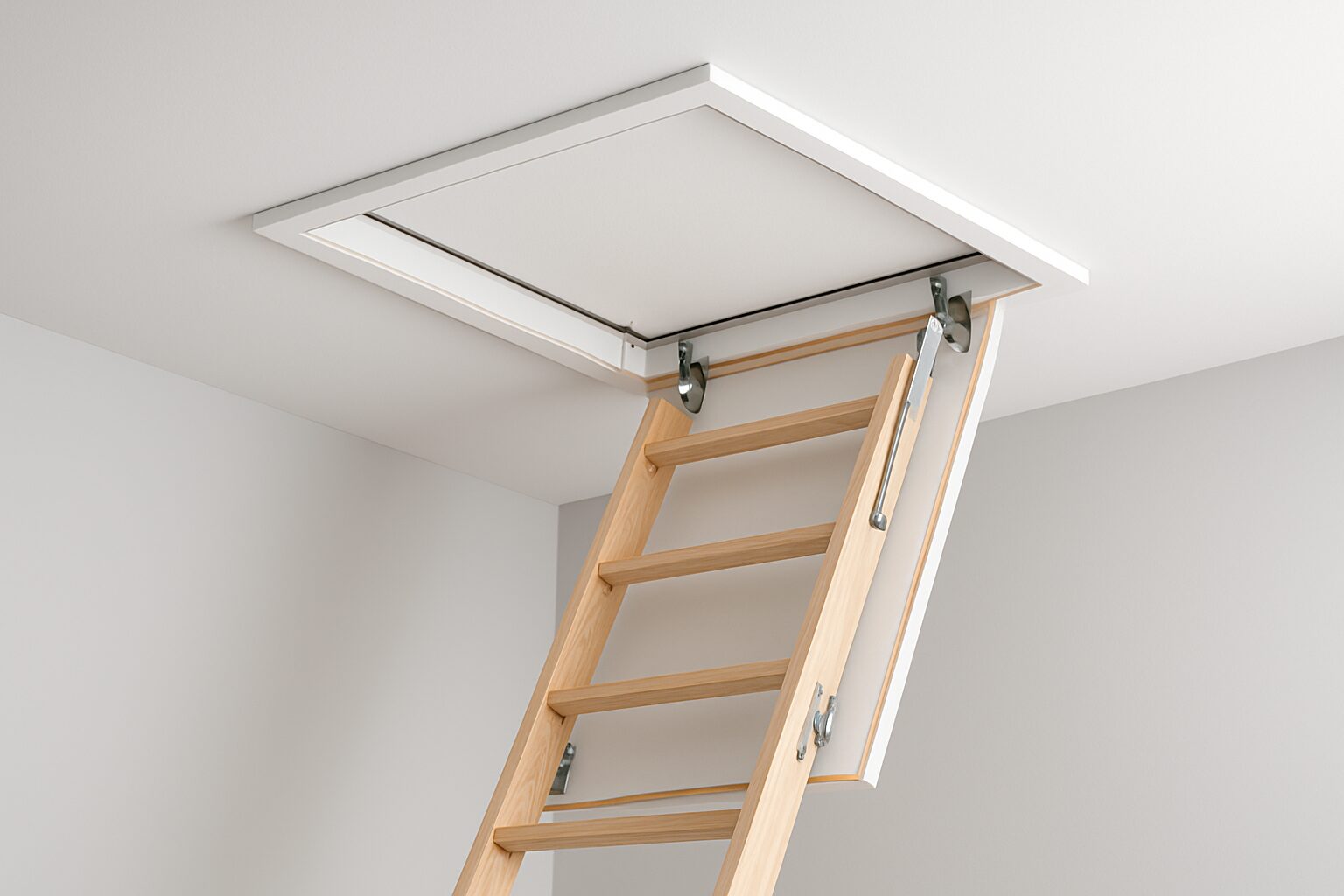
Improving home efficiency often begins with practical details that can make a meaningful difference to everyday comfort. Loft access is one such area, particularly when the loft opening connects a well-insulated living space with an upper area that may experience different temperatures. Modern Loft Ladders can combine convenient access with insulation-conscious design, helping homeowners make better use of available space while supporting a more comfortable indoor environment throughout the year.
Jump To
- The Role of Loft Access in Home Efficiency
- Insulated Hatches for Better Temperature Control
- Combining Access with Space Efficiency
- Why Sealing Around the Hatch Matters
- Comfortable Design for Regular Use
- Making Better Use of Existing Space
- Choosing the Right Design for Your Property
- Installation and Long-Term Performance
- A Practical Step Towards a Comfortable Home
- Conclusion
The Role of Loft Access in Home Efficiency
A loft hatch is more than an entrance to an upper storage area. It forms part of the boundary between the living space and the loft, making its construction and fit relevant to overall home performance.
An appropriately designed access system can help maintain a better separation between the two areas. When the hatch, ladder, and surrounding structure work together effectively, homeowners can enjoy convenient access without overlooking the importance of thermal comfort.
Insulated Hatches for Better Temperature Control
The hatch is a key component of an energy-conscious loft access system. An insulated panel can help reduce unwanted temperature transfer between the loft and the room below.
During colder periods, effective insulation can support heat retention within the living area. In warmer conditions, it can help limit the movement of excess heat from the upper space. This balanced approach can contribute to a more consistent indoor atmosphere.
Combining Access with Space Efficiency
Energy efficiency does not need to come at the expense of convenience. Folding, sliding, and telescopic ladder designs can provide practical access while remaining compact when stored.
This is particularly useful in homes where floor space is limited. A ladder that folds neatly into the loft opening can leave the room below open and functional, while an appropriately insulated hatch continues to provide a thermal barrier.
Why Sealing Around the Hatch Matters
Even a well-insulated access panel benefits from a precise fit. Effective sealing around the hatch can help minimise unwanted air movement and support the overall insulation strategy of the loft.
A properly aligned hatch can also create a neat finish that complements the surrounding ceiling. Attention to the edges, joints, and closing mechanism can therefore contribute to both practical performance and appearance.
Comfortable Design for Regular Use
Energy efficiency is only one part of a successful loft access solution. Comfort should also be considered, particularly when the loft is accessed regularly.
Well-spaced steps, suitable tread depth, supportive hand placement, and smooth operation can make movement between levels more convenient. A comfortable design encourages homeowners to use their loft more effectively while maintaining the practical benefits of an efficient access system.
Making Better Use of Existing Space
An energy-conscious loft ladder can help unlock additional storage without requiring a major extension to the property. Luggage, seasonal decorations, household equipment, and occasional-use belongings can be stored above the main living areas.
Organising these possessions effectively can help free cupboards and rooms below. When access is convenient, homeowners can maintain clearer living spaces while making better use of the home’s existing footprint.
Choosing the Right Design for Your Property
Every home has different requirements. Ceiling height, loft opening dimensions, available floor clearance, insulation needs, and frequency of use should all be considered before selecting an access system.
A compact folding design may suit one property, while a telescopic or sliding arrangement could be more appropriate elsewhere. Matching the ladder to the home’s structure helps create a balanced solution that supports accessibility, comfort, and efficient space management.
Installation and Long-Term Performance
Correct installation is important for both usability and insulation performance. The hatch should close securely, the ladder should operate smoothly, and the surrounding components should fit accurately within the available opening.
Regular checks can help maintain performance over time. Inspecting seals, hinges, fixings, steps, and moving components can support reliable operation and help preserve the condition of the system.
A Practical Step Towards a Comfortable Home
Energy-efficient loft access can complement wider improvements in insulation and household efficiency. By addressing the loft opening alongside other parts of the home’s thermal envelope, homeowners can create a more considered approach to comfort.
The result is an access solution that provides practical benefits every time the loft is used while supporting a more comfortable environment below.
Conclusion
Energy-efficient loft ladders can combine convenient upper-level access with thoughtful insulation performance and space-saving design. An insulated hatch, effective sealing, comfortable steps, reliable construction, and correct installation can work together to create a practical home improvement. By selecting an access system suited to the property’s dimensions and insulation requirements, homeowners can make better use of loft space while supporting comfort and efficient living throughout the year.
Key Takeaways
- Modern loft ladders can enhance home efficiency by providing convenient access while also being designed with insulation in mind.
- An insulated hatch is crucial in reducing temperature transfer between the loft and living space, aiding in both heat retention and temperature regulation.
- Design features such as folding, sliding, and telescopic ladders can optimize space while maintaining easy access to lofts, especially in smaller homes.
- Effective sealing around the loft hatch minimizes air movement and enhances the insulation strategy, contributing to the overall performance of the access system.
- Comfort features in loft access solutions, like well-spaced steps and smooth operation, encourage regular use and improve overall practicality.
- Choosing the right loft access design requires consideration of various factors including ceiling height and insulation needs specific to each property.